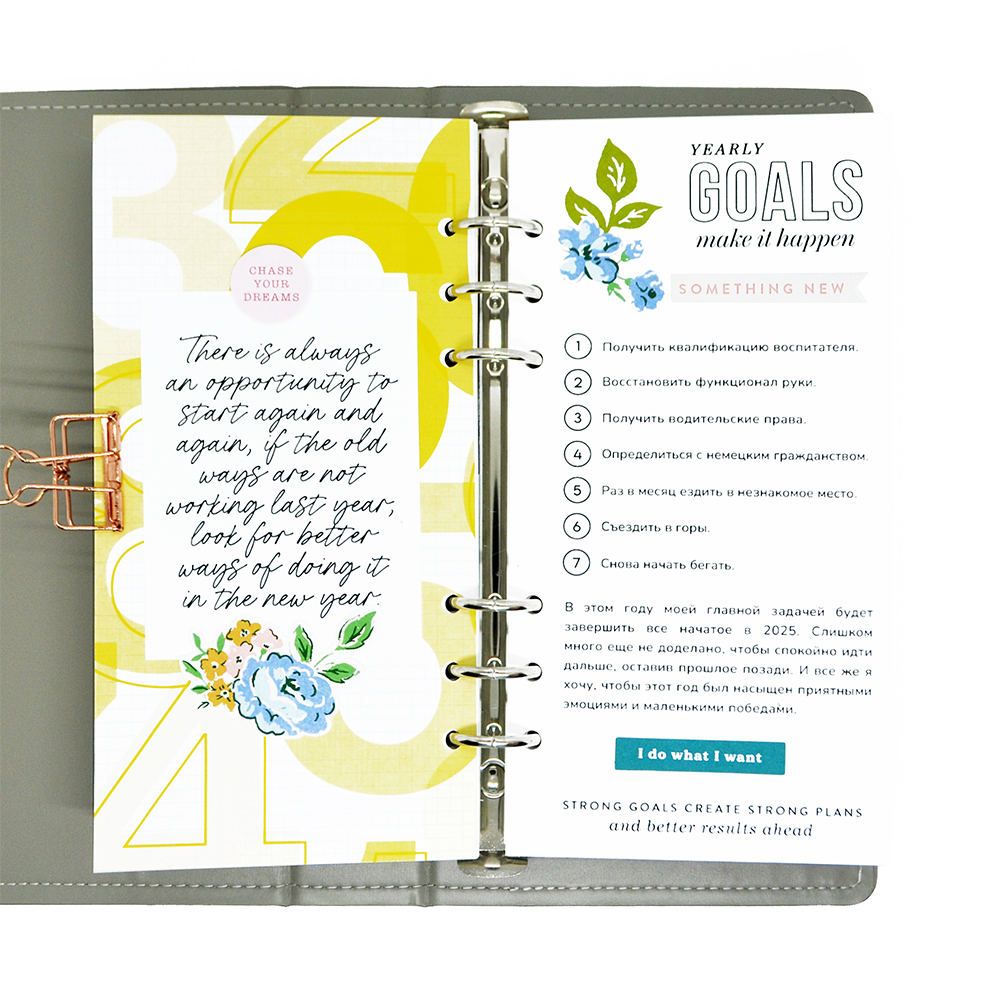
Setting yearly goals
Every year, I start a new album the same way — with a page dedicated to my yearly goals. It’s a small ritual that has become an essential part of how I approach both planning and memory keeping. This page is not about pressure or perfection. It’s about direction. It helps me pause at the beginning of the year, reflect on what I’m dreaming about right now, and turn those thoughts into something tangible. Once the goals are written down, they stop being abstract ideas and start feeling like a path I can actually walk, step by step. Over the years, this first page has become more than just an introduction to the album. It’s a reference point I return to throughout the year — to check in, to mark progress, and sometimes simply to remind myself why I started.
For me, planning is the first real step toward making a dream come true. As long as a dream stays in my head, it remains abstract — beautiful, but distant. Writing my goals down turns that dream into something tangible, something I can see and work toward. This yearly goals page helps me translate vague wishes into clear intentions. It doesn’t mean that everything has to be perfectly defined or set in stone. Instead, it creates a direction. A plan becomes a quiet guide for the year, reminding me what I want to move closer to and why it matters. By putting my goals at the very beginning of the album, I give them space and importance. They become part of the story of the year — not separate from everyday life, but woven into it, one small step at a time.
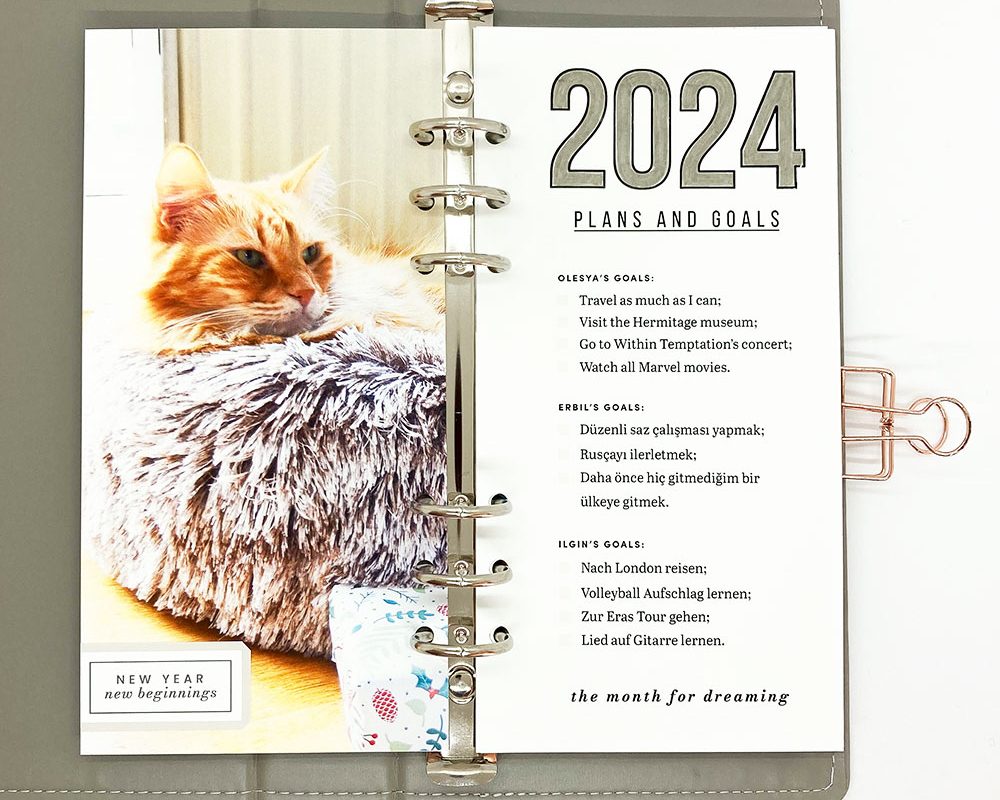
From a scrapbooking point of view, the yearly goals page gives my album a clear structure right from the start. It works as an anchor — the first page that sets the tone and intention for everything that follows. I come back to this page many times throughout the year. Sometimes to check in with myself, sometimes to mark what has already been done, and sometimes simply to see how my priorities have shifted. In that sense, this page is not static. It evolves together with the rest of the album. Having this reference point at the beginning also helps the album feel more complete and intentional. The stories I document during the year don’t exist in isolation — they relate back to the goals, dreams, and directions I set at the start.
The goals I write down each year are not random. They are meant to move me closer to a specific dream — or sometimes to several smaller dreams that shape the season of life I’m in. I don’t see goals as rigid rules or boxes to check. Instead, they act as gentle markers along the way. Some of them are practical, some emotional, some creative — but together they point in the same direction. This approach takes away a lot of pressure. The purpose of these goals isn’t to achieve everything perfectly, but to stay connected to what matters to me right now. Even if a goal changes or no longer feels relevant by the end of the year, it still served its purpose by helping me move forward with intention.
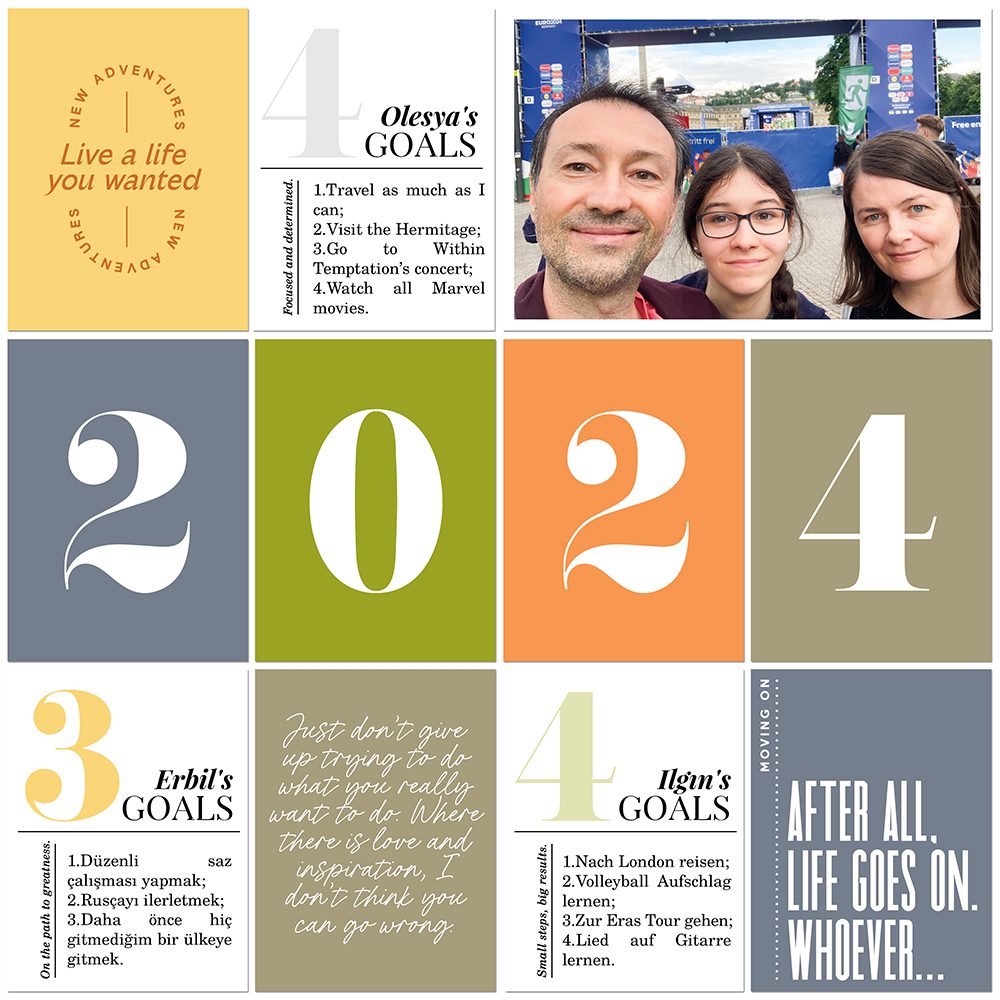
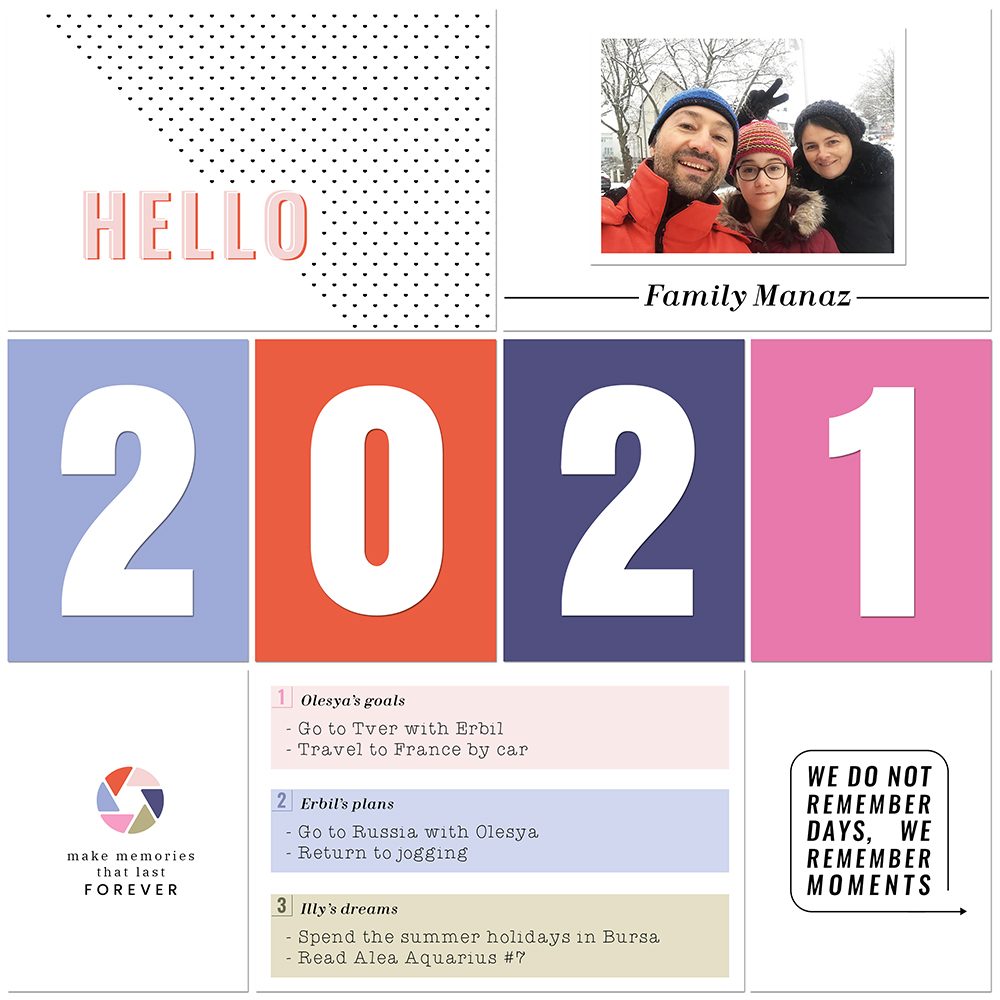
When it comes to my yearly goals pages, the focus is always on the words. The design, embellishments, and techniques are there to support the text, not compete with it. Over the past three years, I’ve created three very different yearly goals pages — each reflecting where I was at that moment. Sometimes I choose a more free-flowing text format, where I describe in my own words what I’m hoping and striving for in the year ahead. This approach feels intuitive and allows space for emotions, uncertainty, and nuance. More often, though, I prefer working with a list. A list gives structure. It makes my goals more visible, easier to revisit, and simpler to track over time. Visually, it creates clarity on the page, and practically, it helps me stay focused without overwhelming myself. For me, lists don’t limit dreams — they help hold them gently in place. This year, I combined both approaches on one page, pairing a structured list of goals with a short section of free-form journaling. That balance felt just right — clear, but still personal.

The techniques I use on these pages are always simple and intentional. Because the text carries the main meaning, I avoid anything that might distract from it. I usually start by placing the words first — deciding where the journaling or the list will live on the page. Only after that do I add photos, cards, or small decorative elements, using them to frame the text and create visual balance. These pages are not about showcasing complex techniques or perfect compositions. They’re about creating a calm, readable space where my goals can exist and be revisited throughout the year.
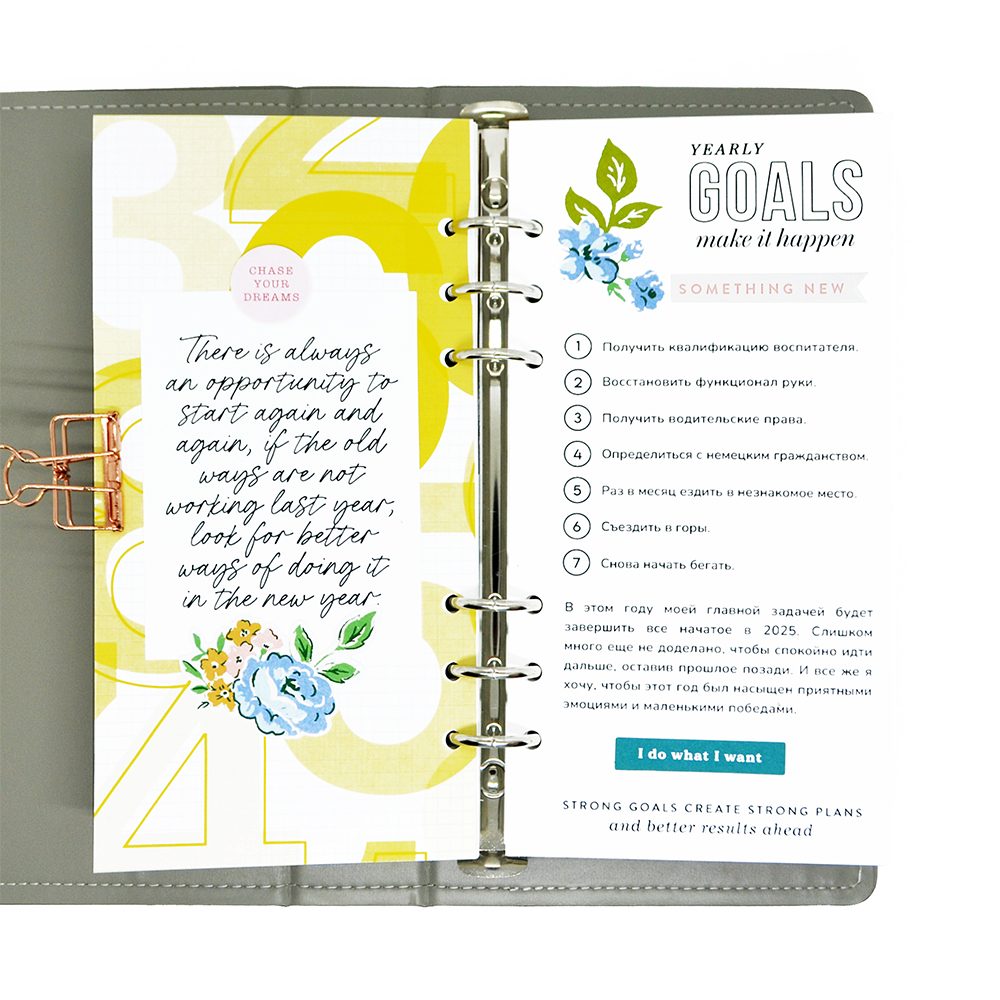
Starting the year with a yearly goals page is more than a planning exercise or a scrapbooking step. It’s a way to pause, reflect, and connect with what matters most in this moment of my life. Each goal, whether listed or written freely, becomes a thread in the story of the year. Returning to this page throughout the months reminds me not only of what I hoped to achieve, but also of how far I’ve come. The page evolves with the year, just as I do. I hope this post inspires you to create your own yearly goals page — a place to capture intentions, celebrate small wins, and hold space for the dreams you want to bring to life. One page, one story, one year.
Liked this post? Give it a like!
PRODUCTS I USED IN THIS TUTORIAL

Olesya Rudenko Manaz
Hi there! I’m a graphic designer, scrapbooker and storyteller. I enjoy creating quality supplies to make scrapbooking and storytelling easy, fun and practical for you.

WINTER JOURNALING PROMPTS
