Pages in minutes
There are moments when you want to document a memory, but don’t have the time, inspiration or energy to build a page from scratch. Choosing photos, arranging elements, balancing the composition — all of it takes time, and sometimes that’s exactly what holds us back from creating. This is where templates make a real difference. Instead of starting with a blank page, you begin with a ready-made structure that already feels complete and balanced. It allows you to focus on your story, not on the technical side of design.
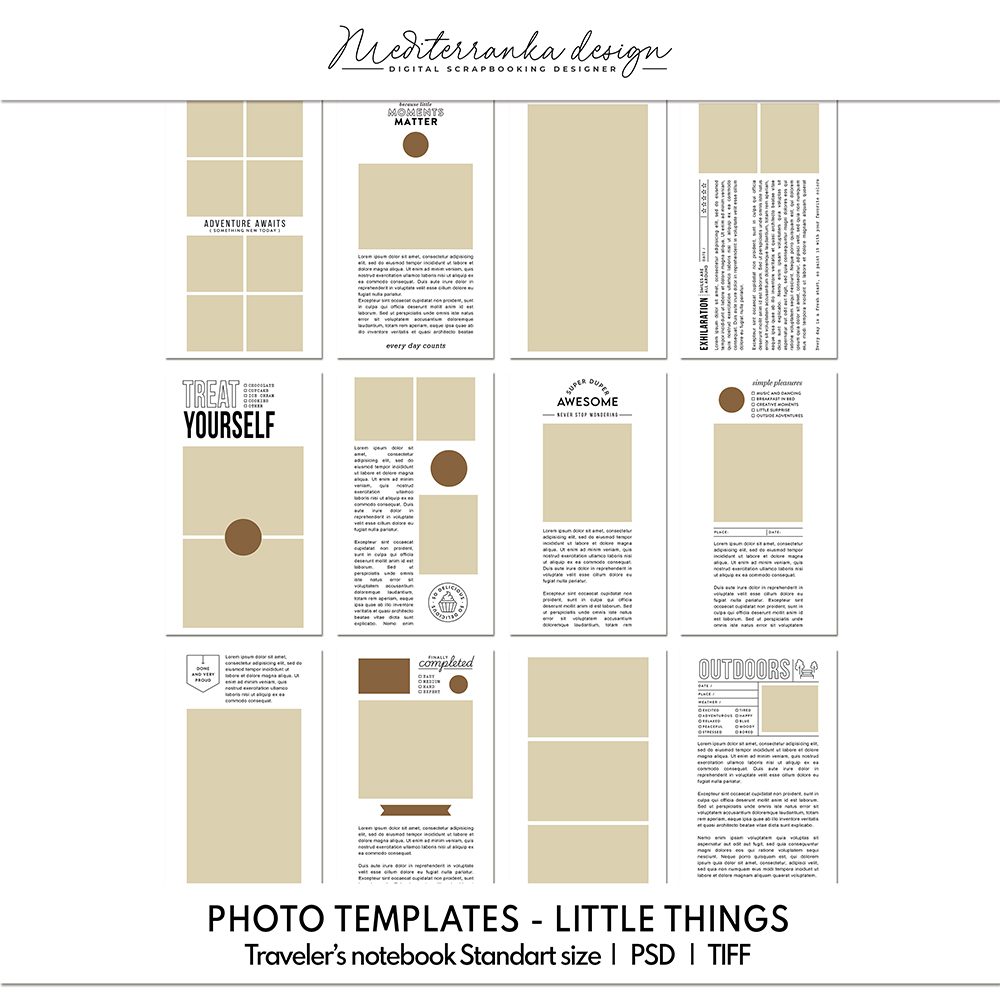
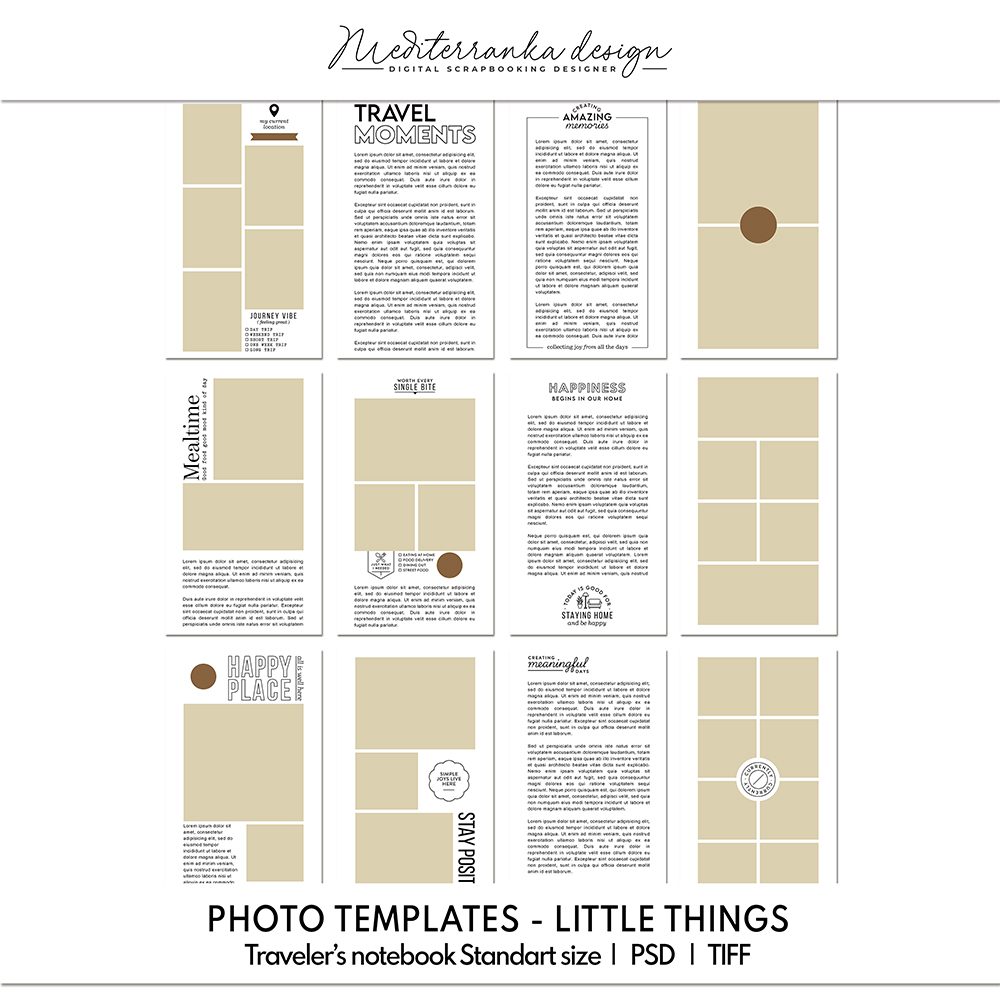
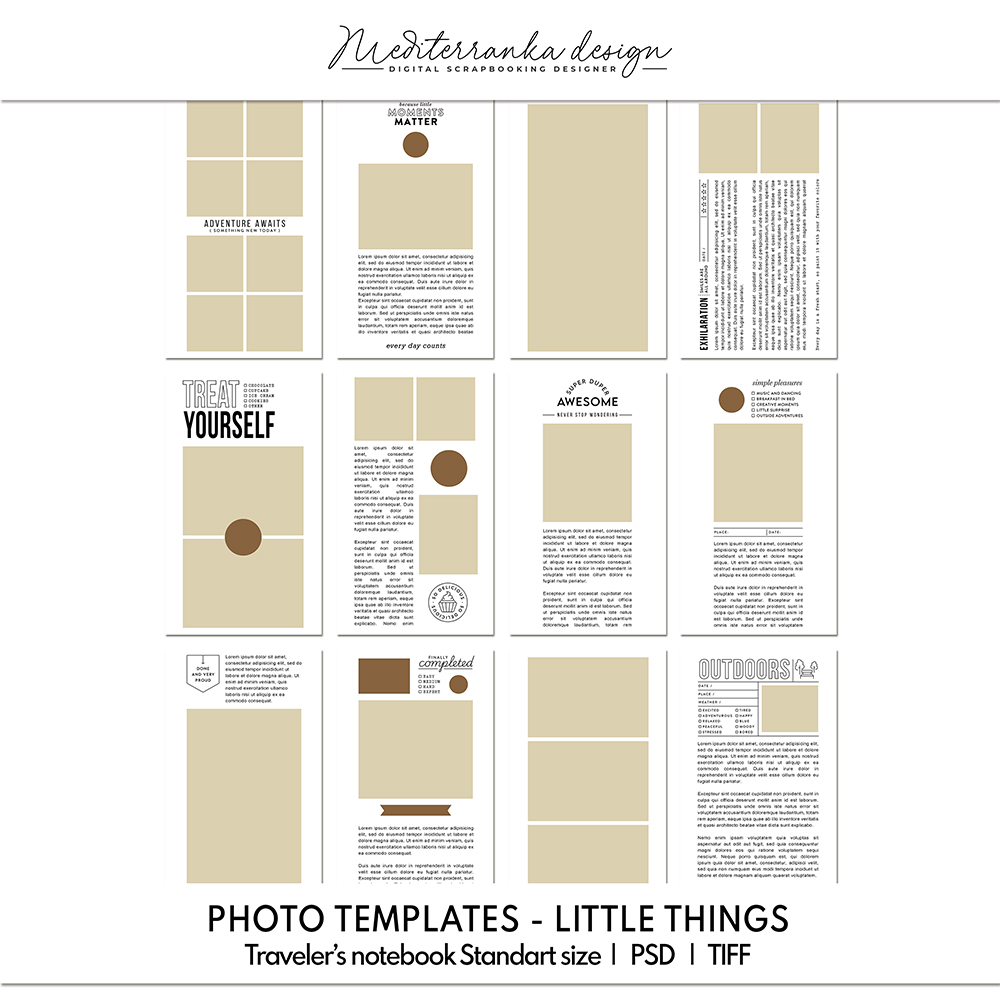
For this tutorial, I used a set of templates designed to make memory keeping faster and easier, while still looking clean and intentional. The templates are available in two formats: 12×12 inches for photobooks and standard traveler’s notebook size. Each template already includes space for photos, built-in digital stamps with phrases, and a text block that you can easily edit and adapt to your own story. This means you don’t have to think about composition or placement — everything is already arranged in a way that feels balanced and cohesive. All you need to do is add your photos and words, and within minutes you have a finished page. At the same time, the templates remain fully flexible: you can move elements around, resize them, or adjust the layout to better fit your photos and style.
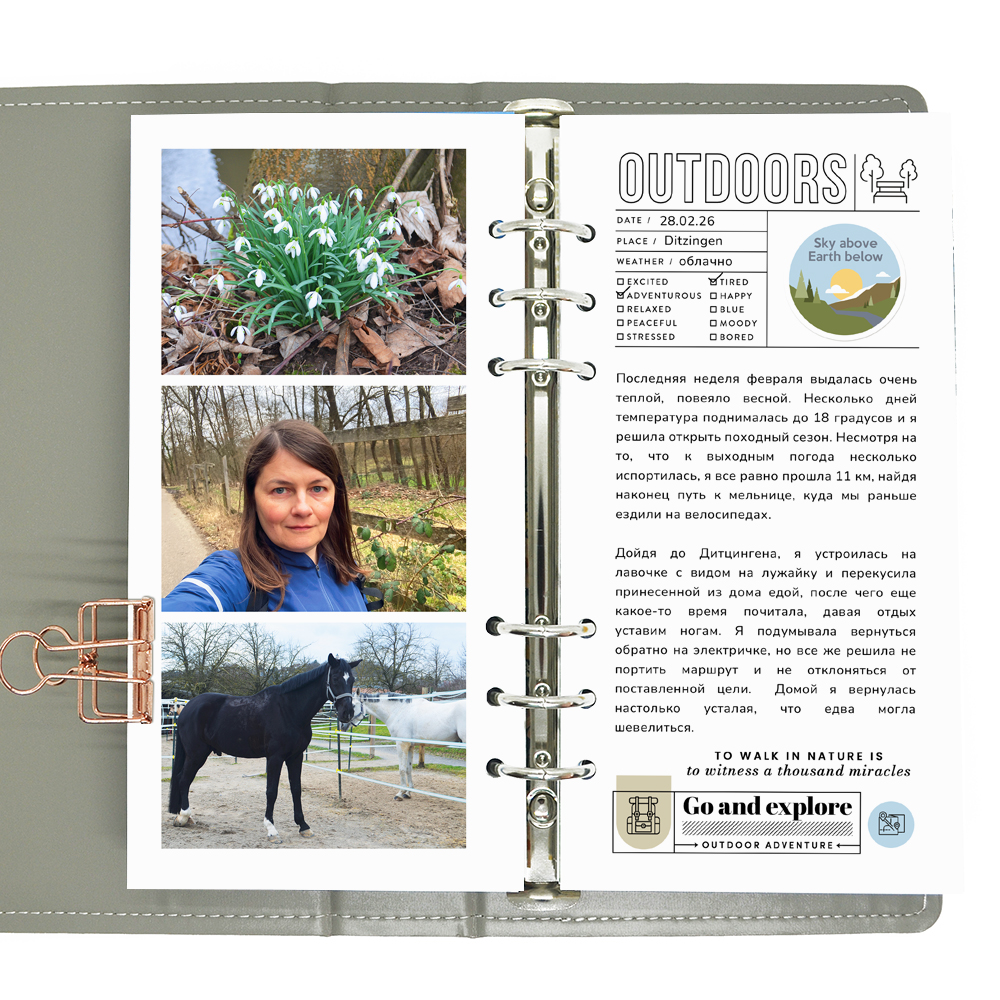
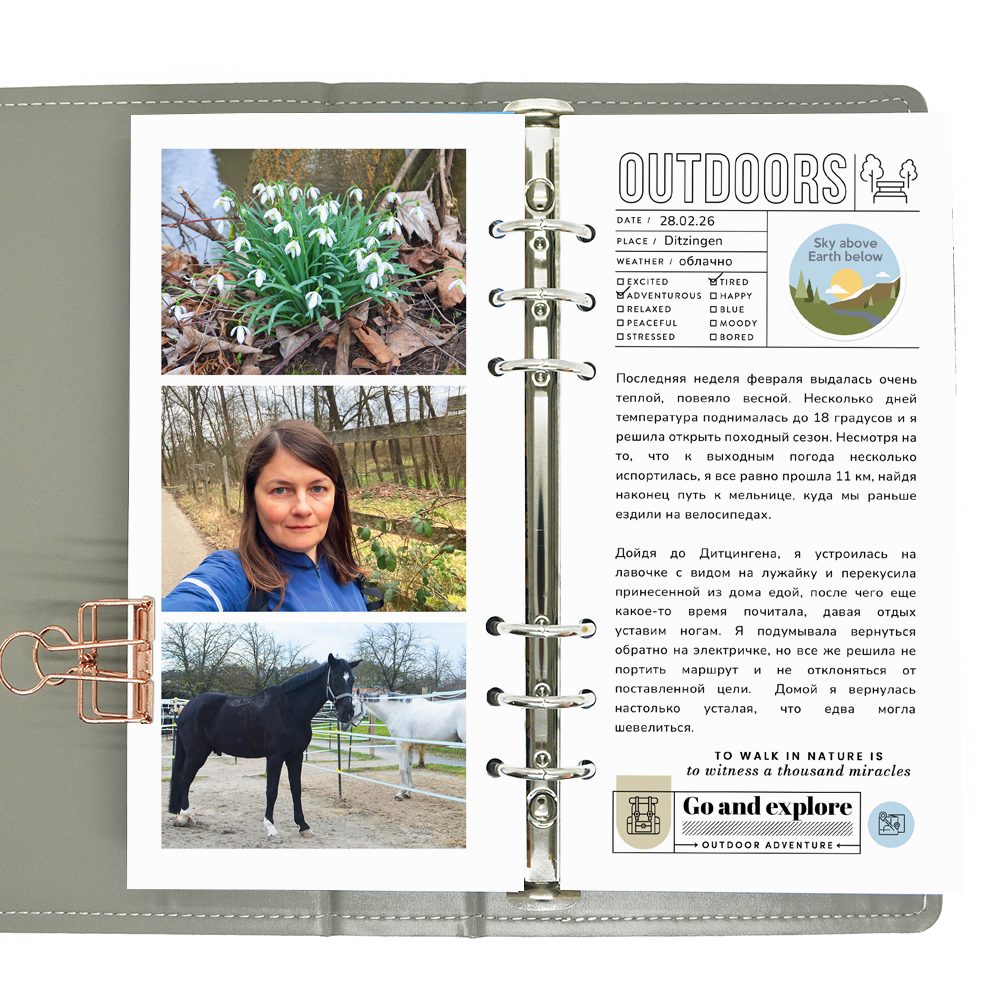
Using two templates from this set, I created a spread about one of my February walks. The last week of the month was unusually warm — it already felt like spring. For a few days, the temperature rose to 18°C, and I decided to open my hiking season. Even though the weather changed a bit by the weekend, I still walked 11 kilometers, finding my way to a mill I used to visit by bike from a nearby town. It turned into one of those simple but memorable days that felt worth documenting.
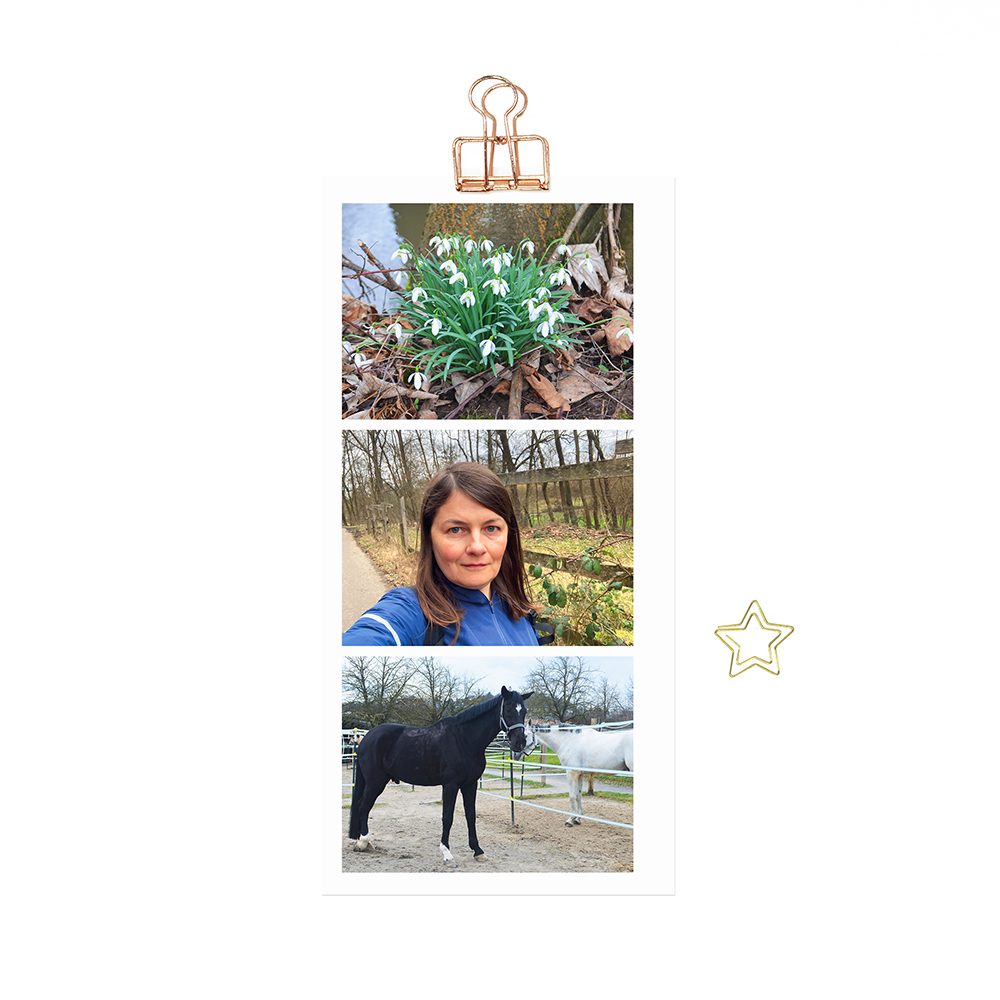
For the right side of the spread, I chose a template with three photo slots. I filled them with a photo of horses at a ranch I passed by, a photo of snowdrops — the first flowers already appearing on some lawns — and a selfie where I look tired but happy. Having these predefined spaces made the process incredibly easy. Instead of thinking about how to arrange the photos, I could simply focus on choosing the moments that best told the story.
For the left side of the spread, I used another template featuring an “outdoors” stamp and a table where you can record the date, location, weather, and choose your mood from a set of options. I really enjoy using this kind of structured journaling. It helps capture the key details of the day in a clear and visual way, while also adding a sense of order to the page. These small facts might seem simple, but they often become the most valuable part of the memory over time.
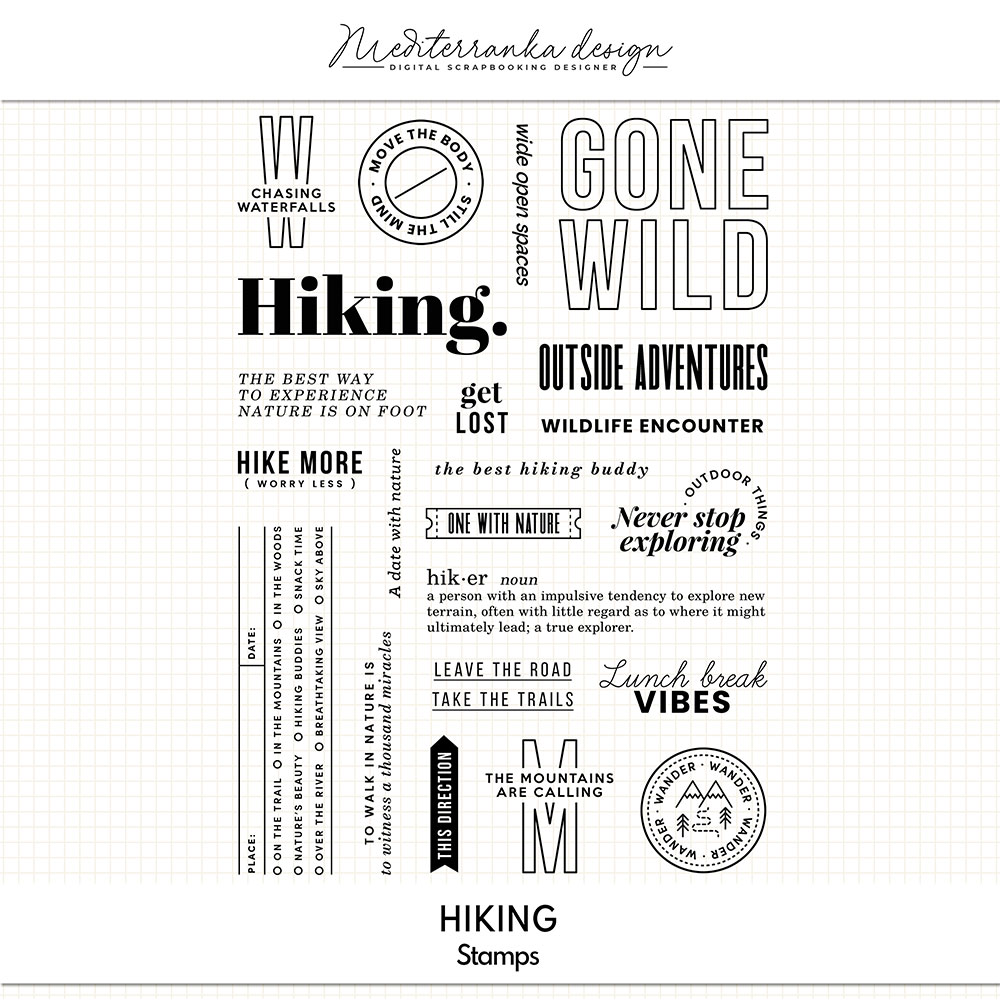
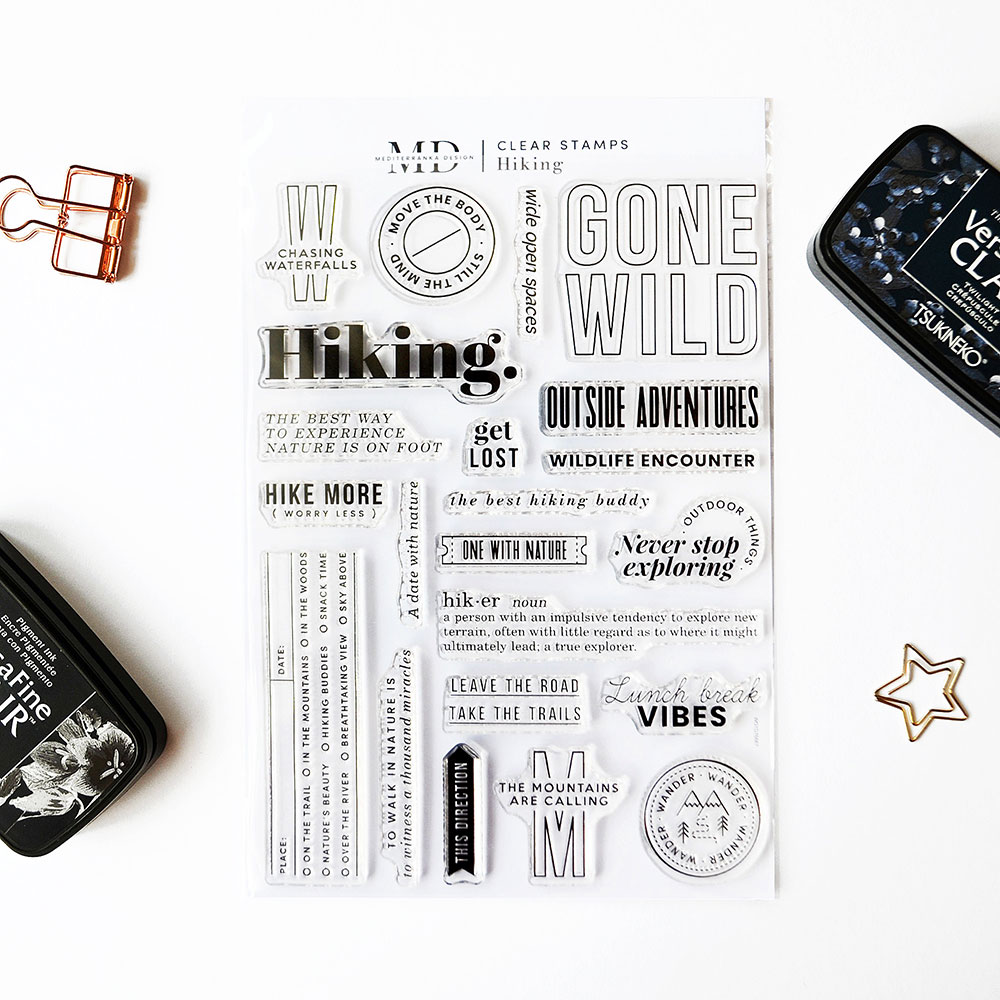
Using the pre-designed text block, I wrote a short story about that day. Instead of adding another photo, I chose to include a printable element with the phrase “sky above — earth below” to bring a bit more color and visual interest to the page. Since there was still some empty space under the text, I added a piece of journaling card, a colored tag and after printing, finished the page with a stamped phrase in black ink.
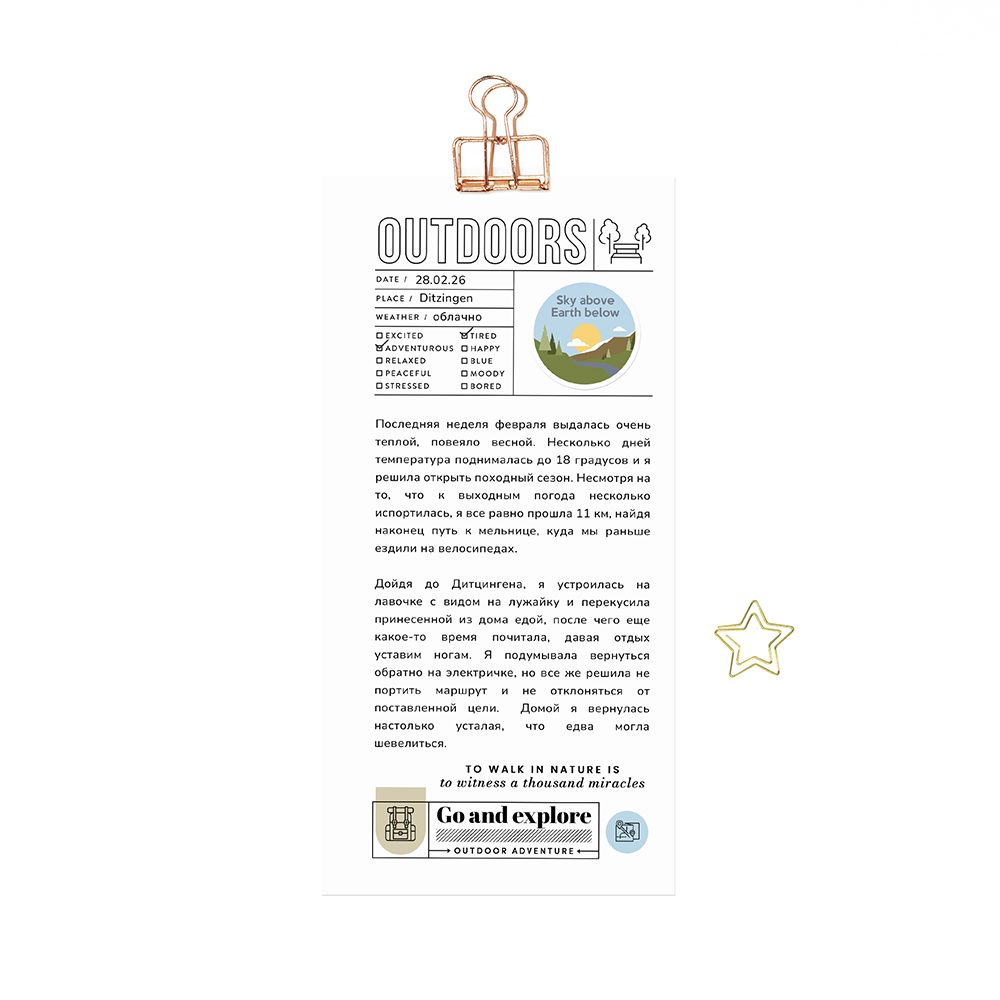
While these templates are designed to work beautifully on their own, you can easily take them a step further if you want a more layered, traditional scrapbooking look. For example, you can combine them with patterned paper, use them as part of a larger spread, or add printable elements on top to bring in more color and texture. Small details like word strips, extra stamps, or layered embellishments can completely change the feel of the page while still keeping the original structure. This makes the templates a very flexible tool: you can keep things minimal and quick, or turn the same base into a more detailed and decorative composition.
Sometimes the hardest part of memory keeping is simply getting started. Templates remove that barrier, giving you a ready-made structure so you can focus on what really matters — your story. This page came together quickly, without overthinking the layout or composition, yet it still feels complete and personal. That’s exactly what I wanted these templates to do: make the process easier, faster, and more enjoyable. Whether you’re short on time or just want a simple, clean starting point, templates can help you turn your photos and memories into a finished page in minutes.
Liked this post? Give it a like!
PRODUCTS I USED IN THIS TUTORIAL
Olesya Rudenko Manaz
Hi there! I’m a graphic designer, scrapbooker and storyteller. I enjoy creating quality supplies to make scrapbooking and storytelling easy, fun and practical for you.
